Dining out is one of the most important social activities, as it is not only about food but also about company, communication and enjoyment. However, not everyone has the same opportunity to experience it in the same way. For people who face barriers, access to restaurants can involve various difficulties, whether in entering the premises or in moving around and being served inside.
Why Restaurant Accessibility Matters for People Who Face Barriers
Ensuring restaurant accessibility is not just a technical exercise in meeting standards; it is a matter of equality, inclusion and respect. The improvements needed to make a restaurant truly accessible cover its outdoor area, its indoor layout, the information it provides and the training of its staff. Accessibility Support Academy can help you introduce the right facilities and service practices, so that all your customers enjoy your restaurant on equal terms.
Who Faces Barriers, and Accessibility in Restaurants
People who face barriers are those who encounter obstacles in reaching and using facilities and services because of physical, sensory, cognitive or other factors. This includes people with physical or sensory disabilities, older people, parents with strollers, people with temporarily limited mobility after an injury and people who need support for other reasons.
Accessibility is closely linked to the philosophy of universal design, which promotes spaces that everyone can use, whatever their abilities or needs.
A restaurant that is not accessible excludes a significant part of the population from the experience of dining out. Intending to welcome everyone is not enough; the right facilities and good service practices are essential.
Accessibility concerns every stage of a visit: approaching the restaurant, entering, moving around, using the facilities and services, and interacting with the staff.
An Accessible Outdoor Area
The first challenge for a person who faces barriers is getting into the restaurant!
Ramps and Entrance Access: To make access easy for wheelchair users, restaurants need ramps wherever there are steps. These ramps also help parents with strollers, older people and anyone who has difficulty moving. Accessibility Support Academy has the right solutions for creating safe, easy-to-use ramps.
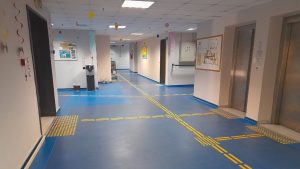
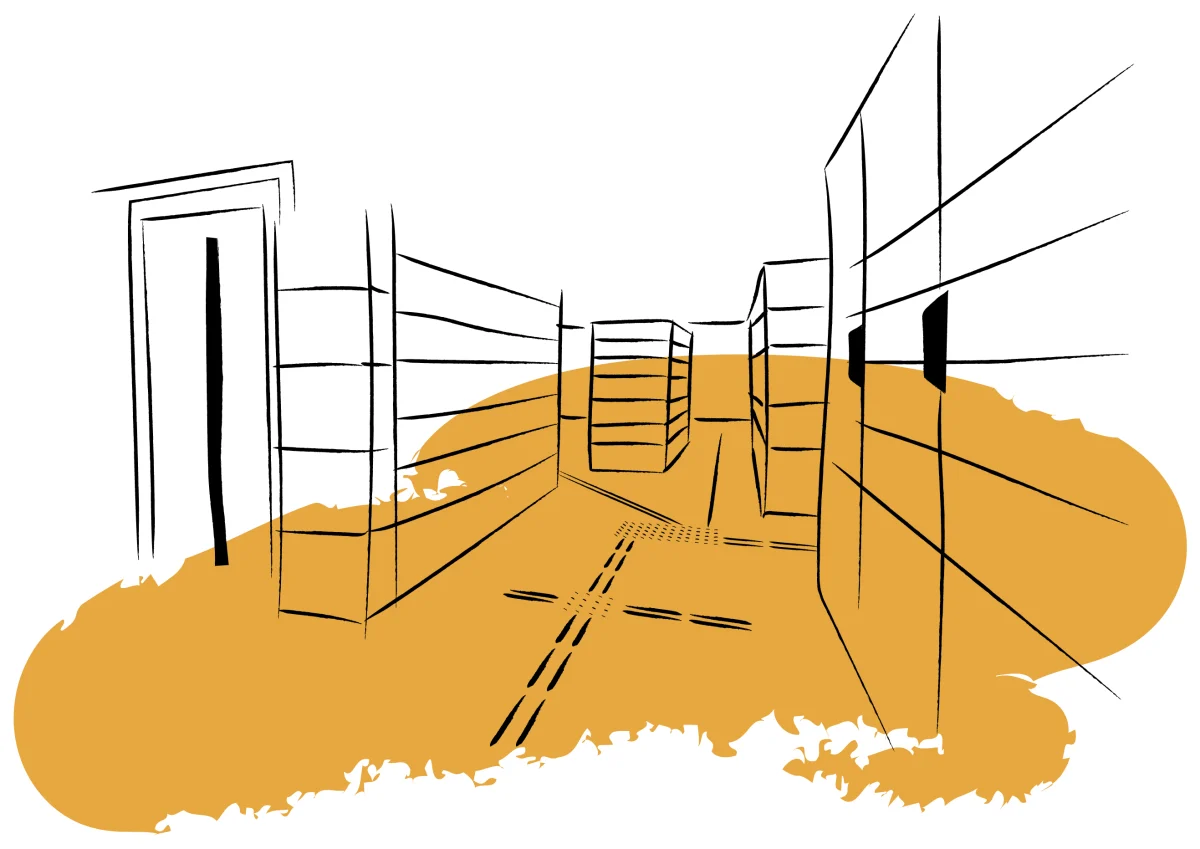
Tactile Guide Paths: For people with visual impairments, tactile guide paths on the sidewalk and around the restaurant are important for moving safely. Raised guidance strips help them reach the entrance without obstacles.
Access from the Street and Parking: If there is a car park, there should be suitably designed spaces near the entrance for easy access. Accessibility Support Academy can guide you in laying out your outdoor area in the best way, so do not hesitate to contact us!
An Accessible Indoor Area
Accessibility does not stop at the entrance. The interior should be arranged so that everyone can move around comfortably.
Aisles and Circulation Space: The aisles between tables and furniture must be wide enough for wheelchair users and people accompanied by a guide dog to move easily.
An Elevator for Upper Floors: If the restaurant has more than one floor, an elevator makes every area easier to reach. It should be roomy, with audio announcements and buttons with raised lettering.
Tables and Chairs: Tables should be designed so that a wheelchair user can sit comfortably, with nothing obstructing their legs.
Accessible Restaurant Services
A restaurant is not truly accessible unless everyone can use its services equally.
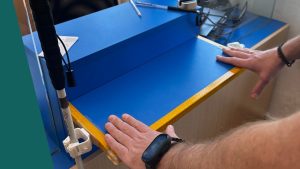
Accessible Menus: Menus should be available in Braille and in large print, so that people with total or partial sight loss can read them. Alternatively, a digital menu that works with screen reader software can be a solution.
Website and Digital Services: The restaurant’s website should follow web accessibility standards, so that people with sensory or physical disabilities can use it.
Accessible Restrooms: Restaurant restrooms must be designed so that everyone can use them. This means enough room to move, grab rails, lower washbasins and easy-to-use doors. An emergency button can give users a greater sense of safety.
The Role of Staff in Accessibility
Staff training is decisive for accessibility.
Service should be based on respect. Staff need to know how to communicate with people with disabilities and be able to offer help when asked. Accessibility Support Academy runs training programs that help your staff serve your customers better!
Complete Accessibility Solutions from Accessibility Support Academy
Accessibility Support Academy offers complete solutions for hospitality professionals who want to make their businesses fully accessible. Whether you need overall improvements to your premises or specialized solutions where required, we are by your side to help you meet every need with professionalism and consistency. Inclusion is not just an ethical choice but a step that benefits all of society, making it more open, fair and welcoming. The measures described here are only some of the many that can help every restaurant welcome all people on equal terms.
Accessibility in restaurants and food venues is not a luxury, but a right for all of us!