A few years ago, an accident at work turned my life upside down. Losing my sight brought me face to face with a new, unknown reality, one full of challenges but also of opportunities to learn and rebuild.
“There is always a way — you only need to learn to recognize it.”
The first organized support came from the Education and Rehabilitation Center for the Blind (KEAT) (opens in a new tab), where I took my first steps into the world of visual impairment. They were difficult steps, full of fear and insecurity, but they also taught me that there is always a way — you only need to learn to recognize it.
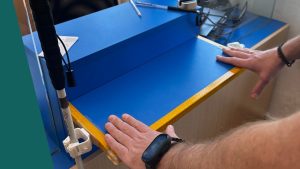
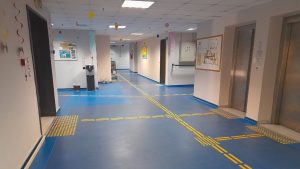
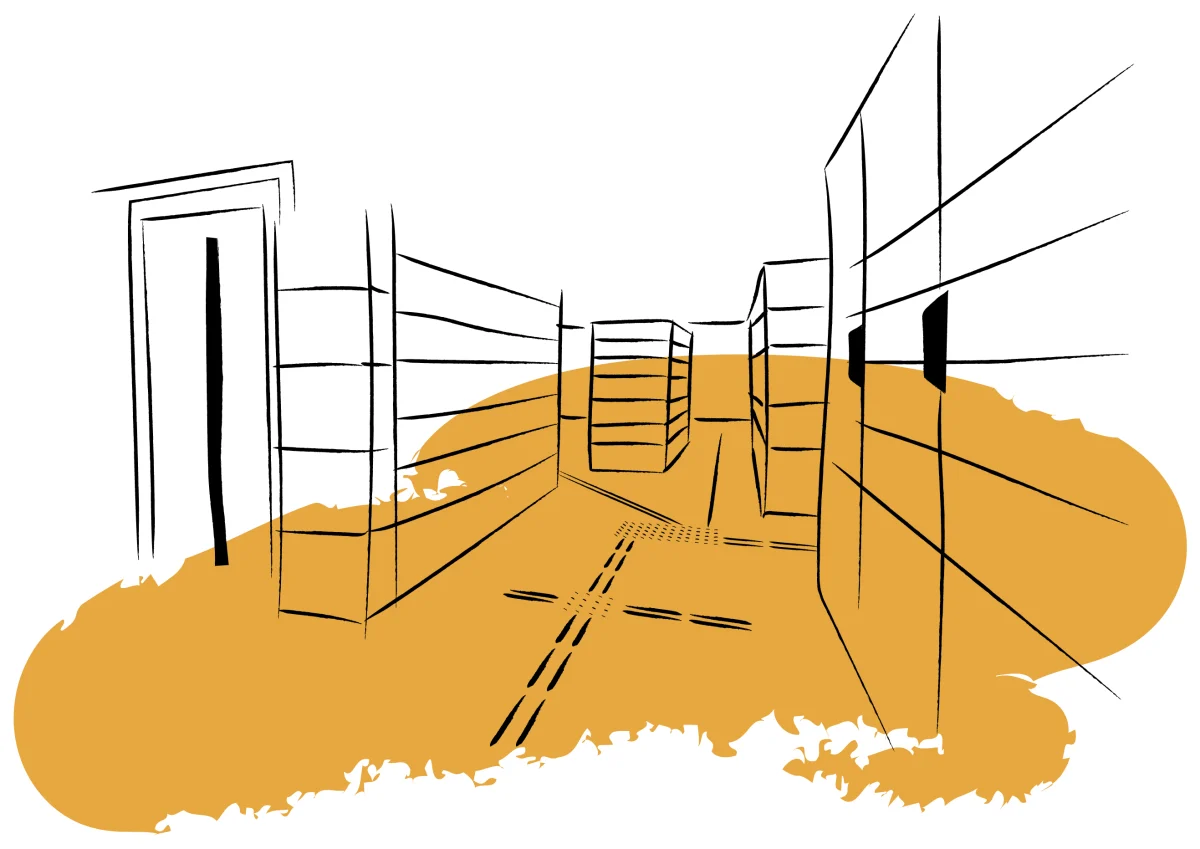
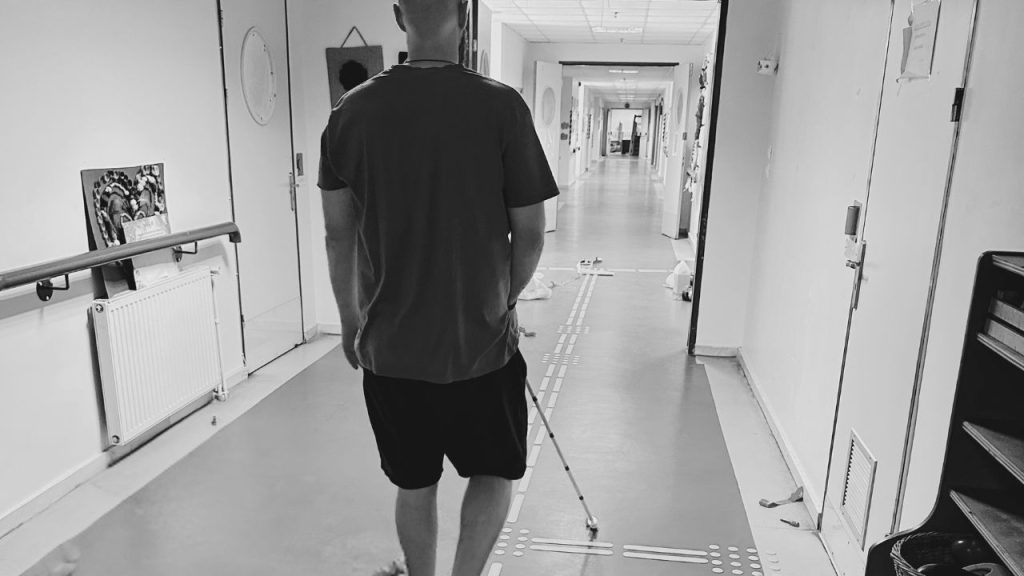
Ten years later, I returned to the same place. This time not as a trainee, but as a partner and creator. Together with my former instructor, Lia Avraam, and a team of excellent scientists and technicians, we designed and delivered a project of deep symbolic and practical importance: the installation of tactile guide paths for people with visual impairments.
Aims and Philosophy
The project was not only about infrastructure; it aimed at something deeper: strengthening independence and equality.
Our approach combined:
• Technical excellence – so that every element meets international standards.
• Safety and functionality – so that it answers the real needs of its users.
• Human-centered design – so that the work strengthens independence, equality and dignity.
“Accessibility is not only a technical matter; it is a matter of social justice and equal participation.”
How the Accessibility Project Was Carried Out
The work developed in five stages, which formed the backbone of the project:
1. Infrastructure Assessment – Systematic recording and identification of points for improvement.
2. Consultancy & Design – Working with the staff and management of KEAT.
3. Architectural Plans & Studies – Technical drawings to international standards.
4. Specialist Technical Design – With experienced civil engineers.
5. Delivery & Installation of Tactile Guide Paths – With precision, consistency and respect.
The Project Team
The success of the project is due to the cooperation of a multidisciplinary team:
• Thanasis Sideris – Project Manager, Consultant & Evaluator.
• Lia Avraam – Orientation, mobility and daily living skills instructor, Accessibility Consultant & Educational Support.
• Dimitra Arampatzi – Civil Engineer, Technical Design.
• Thanasis Atsalos – Civil Engineer, Technical Study & Supervision.
• Marco Marengo – Tactile Guide Path Installation Specialist.
The contribution of the management and staff of KEAT, who supported the project in a spirit of open cooperation, was decisive.
Special mention goes to Mrs Sofia Chamonikolaou, Director of KEAT, whose trust, strategic vision and constant support were key to the successful completion of the project.
Symbols of a Journey
The tactile guide paths installed at KEAT are not simply technical lines on a floor. They are symbols of a journey — toward independence, social equality and human dignity.
For me personally, they are something more: proof that the first step you take in the dark can lead you to the point where you show others the way.
If you would like us to take on the accessibility project for your own building, from assessment and design to certified delivery, contact us.