There is a simple way to know whether a project succeeded: see whether you were asked to continue it.
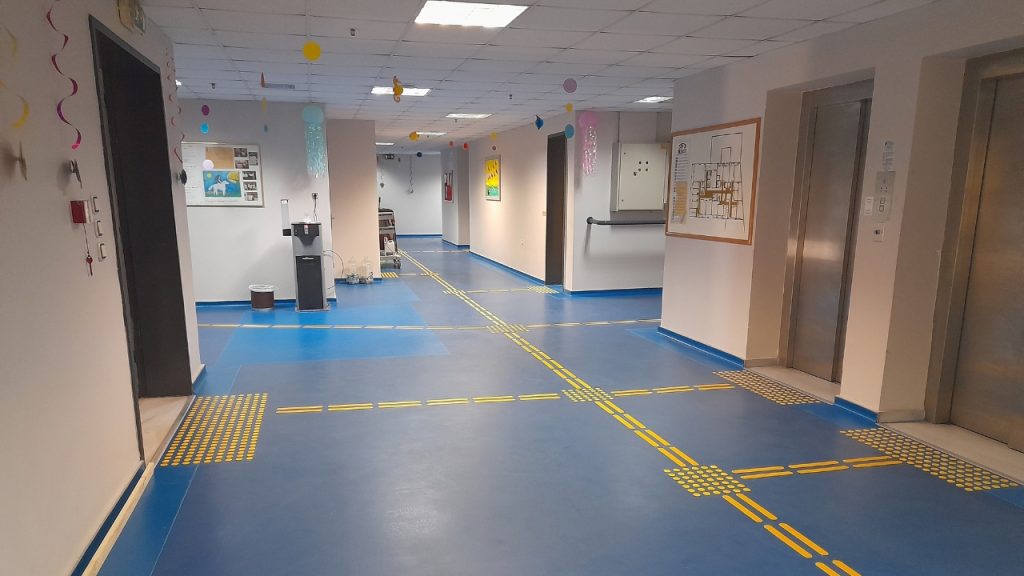
After the installation of tactile guide paths on the ground floor of the Education and Rehabilitation Center for the Blind (KEAT), our cooperation moved one floor up. In July 2026 we completed the design and delivery of a guidance system for people with visual impairments on the first floor of the building, in Kallithea.
From the ground floor to the first floor of KEAT
For us, this new work is the next chapter of a partnership rather than a separate assignment. KEAT knows the real needs of people with visual impairments in depth. The people who move through its spaces every day are the most demanding judges a tactile guide path could have.
That is why the decision to continue on the first floor carries special weight. The quality of a project shows in its result. The quality of a partnership shows in the decision to continue it.
What is a guidance system for people with visual impairments
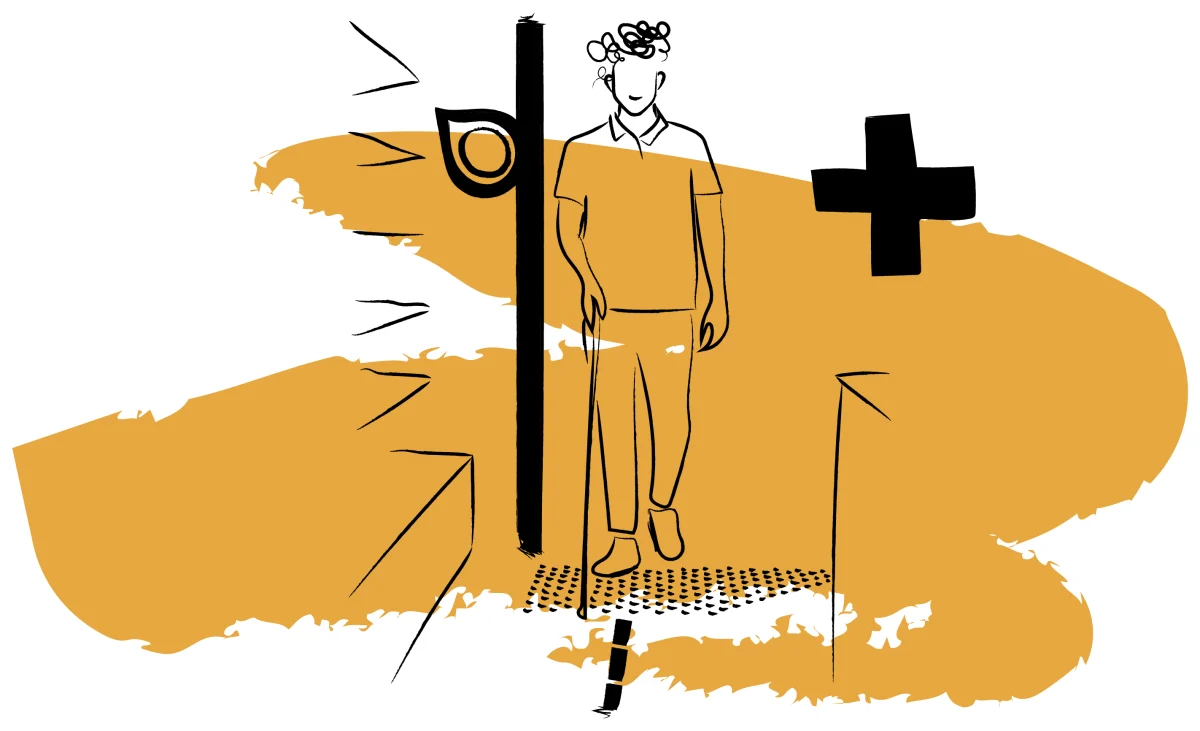
Tactile guide paths are elements on the floor that the user recognizes with a white cane or underfoot. A guidance system, however, is more than its materials. It is an organized way for a space to give information to whoever moves through it.
It consists of two basic elements:
• Linear guides: they create a continuous route and show the direction.
• Tactile markers: they give information where the user stops or changes direction, the points where a decision has to be made.
The right relationship between the two is what makes a route understandable. Without it, the guide is on the floor but helps no one to find their way.
How we designed the route on the first floor
The first floor of KEAT has many rooms and several decision points. This raised the demands of the design and shaped the way we worked.
Studying the space
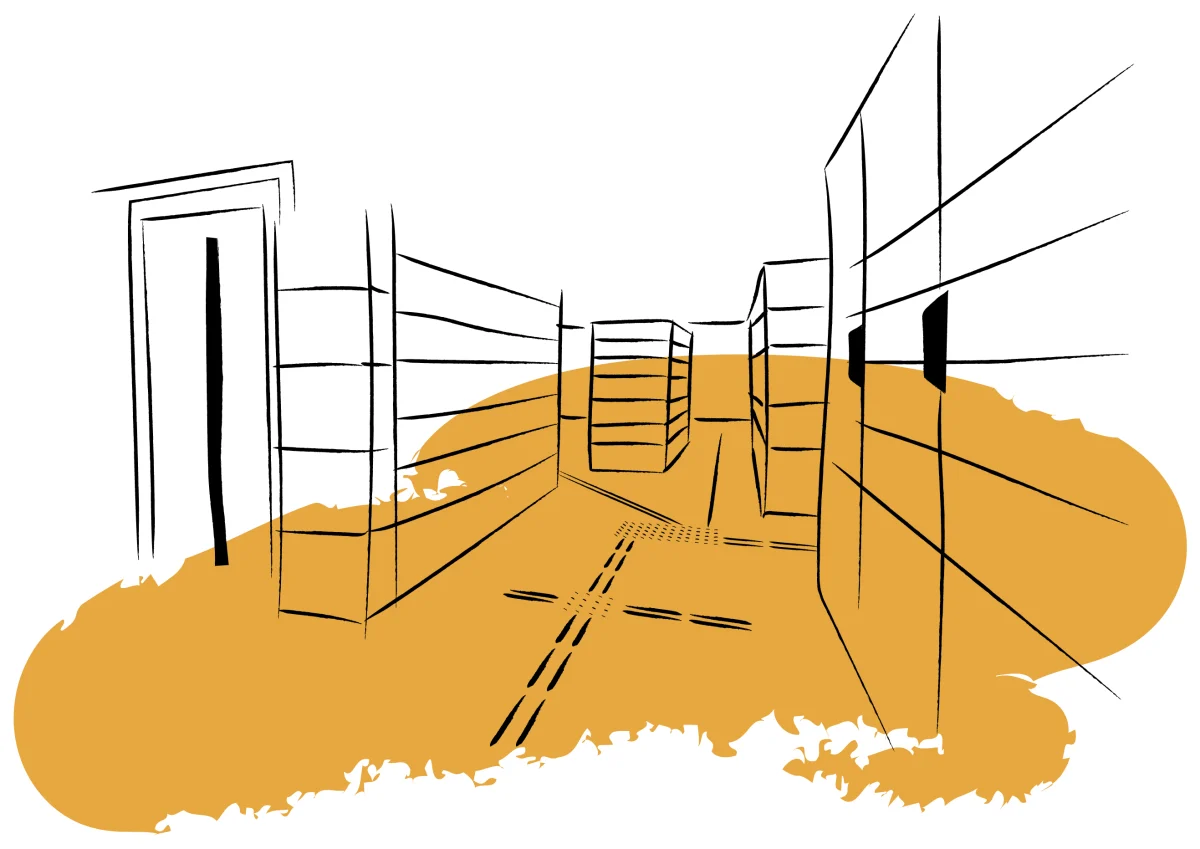
We laid out the routes precisely, so that the guidance reads as one unified system and not as disconnected pieces. We paid particular attention to the decision points, where the route branches and the user needs clear information to choose a direction.
Laying out routes and decision points
We started from the floor itself: which rooms are served, where people come from and where they want to go. The route is designed first, and the guide is installed afterwards.
Precision in installation
In functional accessibility, detail matters. The position of each element, its alignment and how clearly it can be felt determine whether the user will trust the route.
Functional evaluation
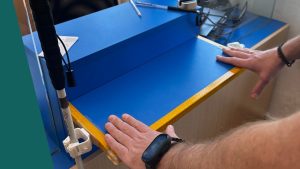
The project does not end with installation. We tested the result in practice, point by point, to make sure the route guides clearly from beginning to end.
Accessibility that works in practice
Accessibility is the way a space communicates with a person and allows them to move through it independently. A specification can be met on paper while the route does not work. What we care about is that it works.
This new assignment from KEAT strengthens our commitment to approach every project with study, precision and an understanding of the person who will use the space. We worked in the same way at the “EYROS” facility.
From the ground floor to the first floor, our partnership with KEAT continues.
Would you like to make your own building accessible? See our services for accessibility in buildings or contact us. We take the project from assessment and design through to delivery.
Frequently asked questions about tactile guide paths
What is a tactile guide path?
It is a route on the floor that can be felt and that helps people with visual impairments move safely and independently. The user recognizes it with a white cane or underfoot.
Are tactile guide paths needed indoors too?
Yes. In buildings with many rooms, corridors and junctions, a tactile guide path shows how to get from the entrance or the stairs to the room you are looking for, without depending on a guide.
Where does a building guidance project start?
With a study of the space. First the needs are recorded and the routes and decision points are laid out. Installation follows and, finally, the route is tested in practice.