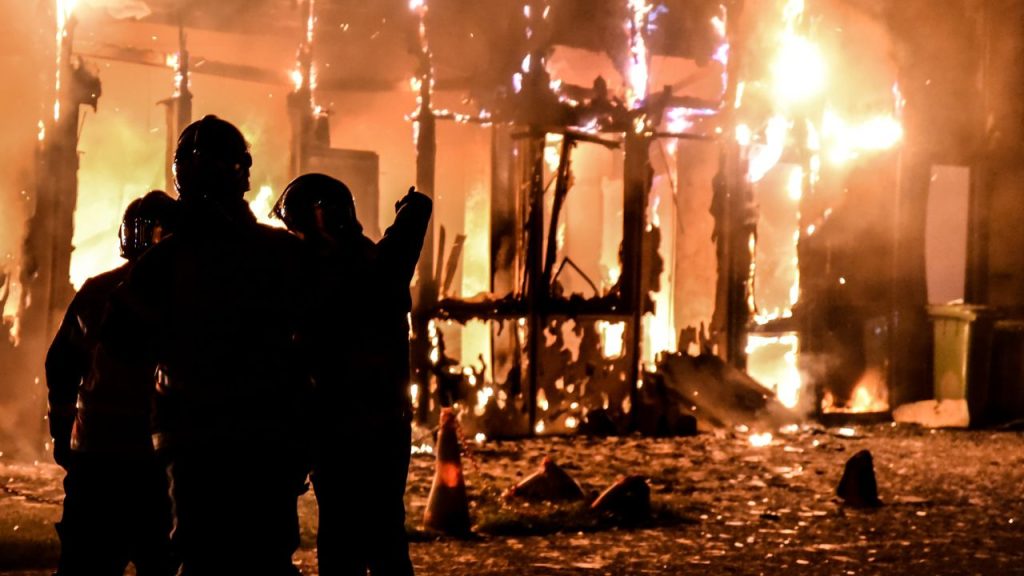
In a moment of crisis, time takes on a different weight. The lights go out, sirens sound, and the emergency exit becomes the only way to safety. There, in those critical seconds, it becomes clear who truly has the right to be saved — and who only has “access” in theory.
Emergencies do not create problems — they reveal the ones that already exist. And what they reveal for people with disabilities is harsh: that accessibility is often treated as a marginal need, as “something for later”, as a luxury for prosperous times. Until the crisis arrives — and it becomes urgent.
Accessibility not only for Everyday Life, but for Survival
When we think about accessibility, our minds go to ramps, elevators and wider sidewalks. But in an emergency — an earthquake, fire, flood or terrorist attack — accessibility stops being a convenience. It becomes a matter of life and death.
How is a school evacuated when some of its pupils have mobility disabilities?
What is the rescue strategy for an older person who cannot hear the evacuation instructions because there is no audible signage?
Who makes sure that an emergency alert reaches blind people when it relies exclusively on visual messages?
Most of the time, the answer is: no one.
Invisible in the Protocols, Invisible in the Evacuation
The great majority of civil protection plans are designed for “average” people: people who can see, hear, walk quickly and immediately understand complex instructions. But that is not the whole of society.
- A warning system that offers no alternative communication channels
- An assembly point with no accessible route to it
- An elevator that shuts down automatically in every earthquake
- A rescue boat with no provision for wheelchairs
- An emergency line with no TTY or sign language video call option
All of these are real examples of exclusion.
They are failures that cost human lives.
Preparedness on Equal Terms
The idea of “preparing” for a crisis often goes no further than evacuation drills for the general population. The most vulnerable groups are left out of the discussion — because they are considered “complicated”, “difficult” or “few”. However:
- Every person has the right to be saved.
- Any evacuation plan that leaves behind even one person is incomplete.
- Inclusion is not a matter of numbers. It is a matter of dignity.
Inclusive Civil Protection, from the Plan to the Field
So what does it really mean to build accessibility into an emergency plan?
- Multi-channel alerts: visual, audible, vibrating and digital, compatible with screen readers
- Training rescuers in techniques for assisting people with disabilities
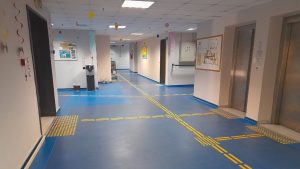
- Evacuation maps with clear, barrier-free routes
- Reception facilities with accessible restrooms and beds, and communication in sign language
- Involving people with disabilities in designing the procedures, not just in carrying them out
Accessibility in times of crisis is not a specialist subject for technicians. It is a political decision and a moral obligation.
A Society that Leaves No One Behind
The true civilization of a society does not show when everything runs smoothly, but when it is put to the test. That is when we see whether its systems are built with respect, care and foresight. In a disaster, it is not only those near the exit who are saved — it is those who were included in the planning. Inclusion, then, is not a luxury for “good times”. It is what makes the difference when things go wrong.
The climate crisis, natural disasters, technological failures — all show that emergencies are no longer hypothetical. They are part of reality. And this new reality calls for new standards: resilient, inclusive and universal.
So that we do not speak of equality only when all is well, but also when everything hangs by a thread.
Accessibility in times of crisis is not an option. It is an obligation. And perhaps the most meaningful act of social justice.